For business owners

You didn't open a business to fight with spreadsheets.

Spiro365 is for small service businesses, freelancers, home businesses and traders — and for businesses running today on Excel, paper or WhatsApp.

Sign upRequest a demo

A business owner with a clipboard and laptop, packing orders at home

An ordinary working day — example scenario.

Example journeys

Three businesses, three ordinary days

Fictional example scenarios, shown on product previews with example data — not customer testimonials.

The design studio in AchrafiehConsulting · USD

A two-person studio quoting projects, invoicing milestones, and chasing late payers politely.

  1. Morning: a quote for a new client — USD 2,100.00, two line items, five minutes.
  2. The client accepts; the quote becomes an invoice draft, reviewed and finalized.
  3. Thursday: half the amount arrives — recorded against the invoice in seconds.
  4. "Who owes you" shows exactly what's still open, and how late it is.
Example dataThe studio's invoice — example data
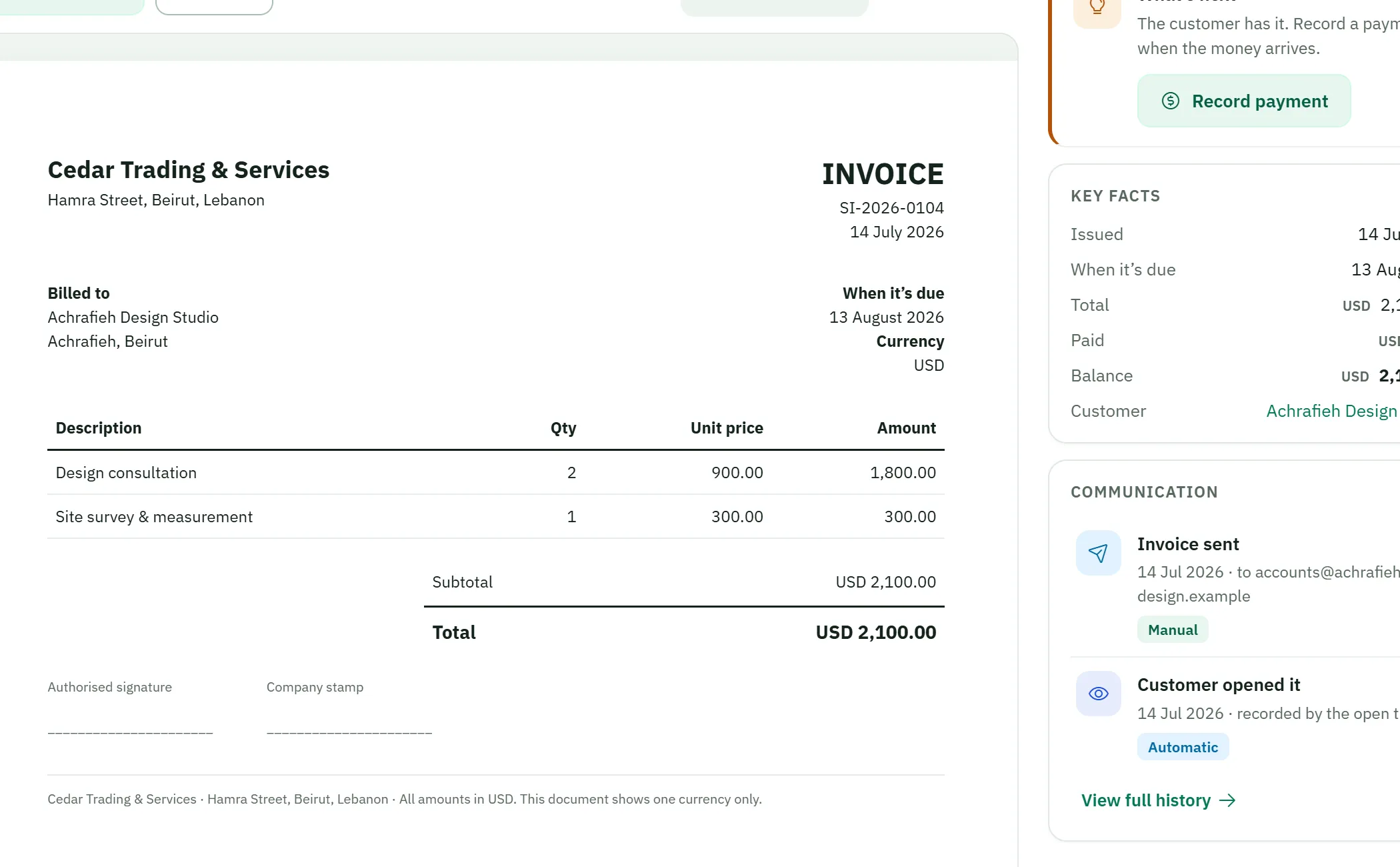
The invoice from step 2.

The trader in TripoliTrading · USD + LBP

Textiles sold to shops across the north — some pay in dollars, some in lira, most pay late.

  1. Each shop is a customer with its own balance — USD and LBP counted separately.
  2. Invoices go out in Arabic; the figures are Western digits, identical either way.
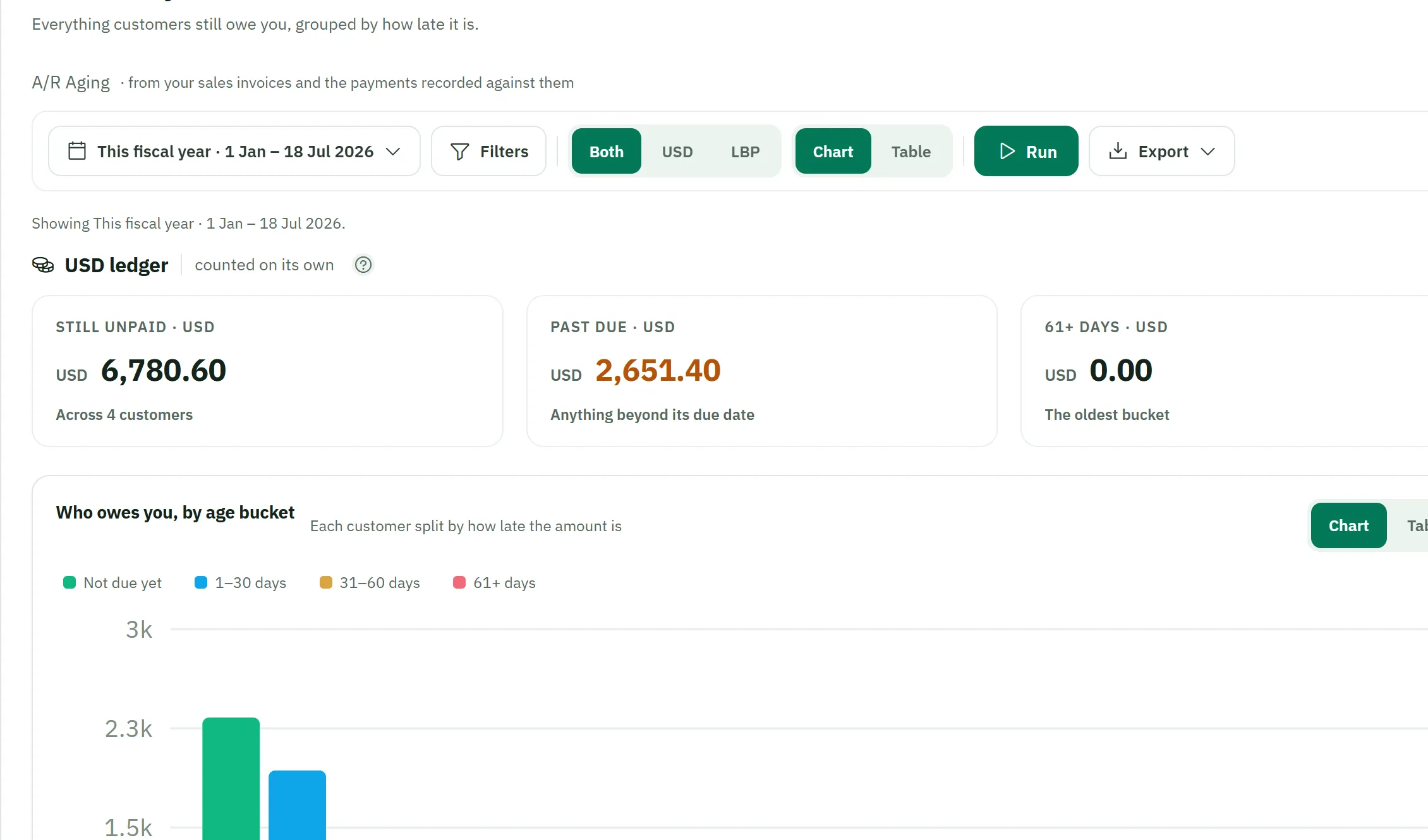
  3. End of week: "who owes you" grouped by lateness says who gets the first call.
  4. No mental exchange-rate arithmetic — the product never blends the two currencies.
Example dataWho owes you, USD ledger counted on its own — example data

"Who owes you", each ledger on its own.

The sweets shop in BatrounFood retail · LBP

A family shop that lived in a paper notebook until the notebook got wet.

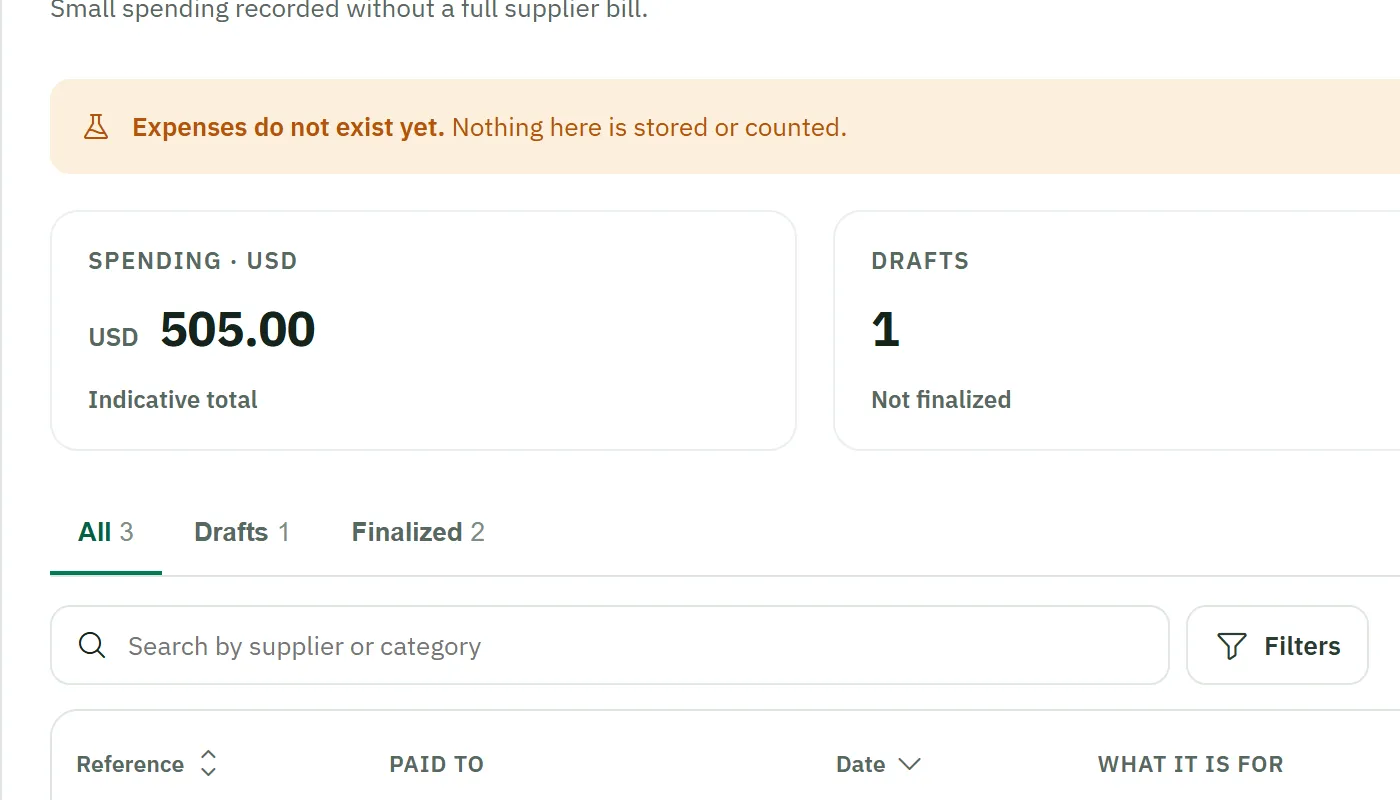
  1. Daily expenses — sugar, boxes, the generator bill — captured in thirty seconds each.
  2. Wholesale orders invoiced properly, in LBP, with the shop's own item names.
  3. Receipts printed for whoever asks — bilingual if the customer prefers.
  4. At month's end, the summary reads like the shop's actual month.
Example dataThe expenses list — example data

The expense list from step 1.

The move

From Excel, paper or WhatsApp — without drama

1

Bring your customers

Start with the people you invoice — names and contacts first, history later.

2

Bring your balances

Opening balances come in through a controlled cutover process — reviewed, not dumped.

3

Work normally

Quote, invoice, get paid, record expenses — the books build themselves.

4

Invite your accountant

When you're ready, grant access — starting from zero, controlled by you.

You don't need to know accounting. Really.

Your workspace speaks plain business language — customers, invoices, payments, expenses. Correct double-entry accounting runs behind the scenes, where your accountant can work with it properly. You see your business; the books stay right.

What you say:

"Achrafieh Design Studio paid USD 1,050.00 of their invoice."


What the books record, behind the scenes:

A receipt document · the payment tied to the invoice · the customer's balance updated · an entry in the audit history — all correctly, all automatically.

Whatever kind of small business you run

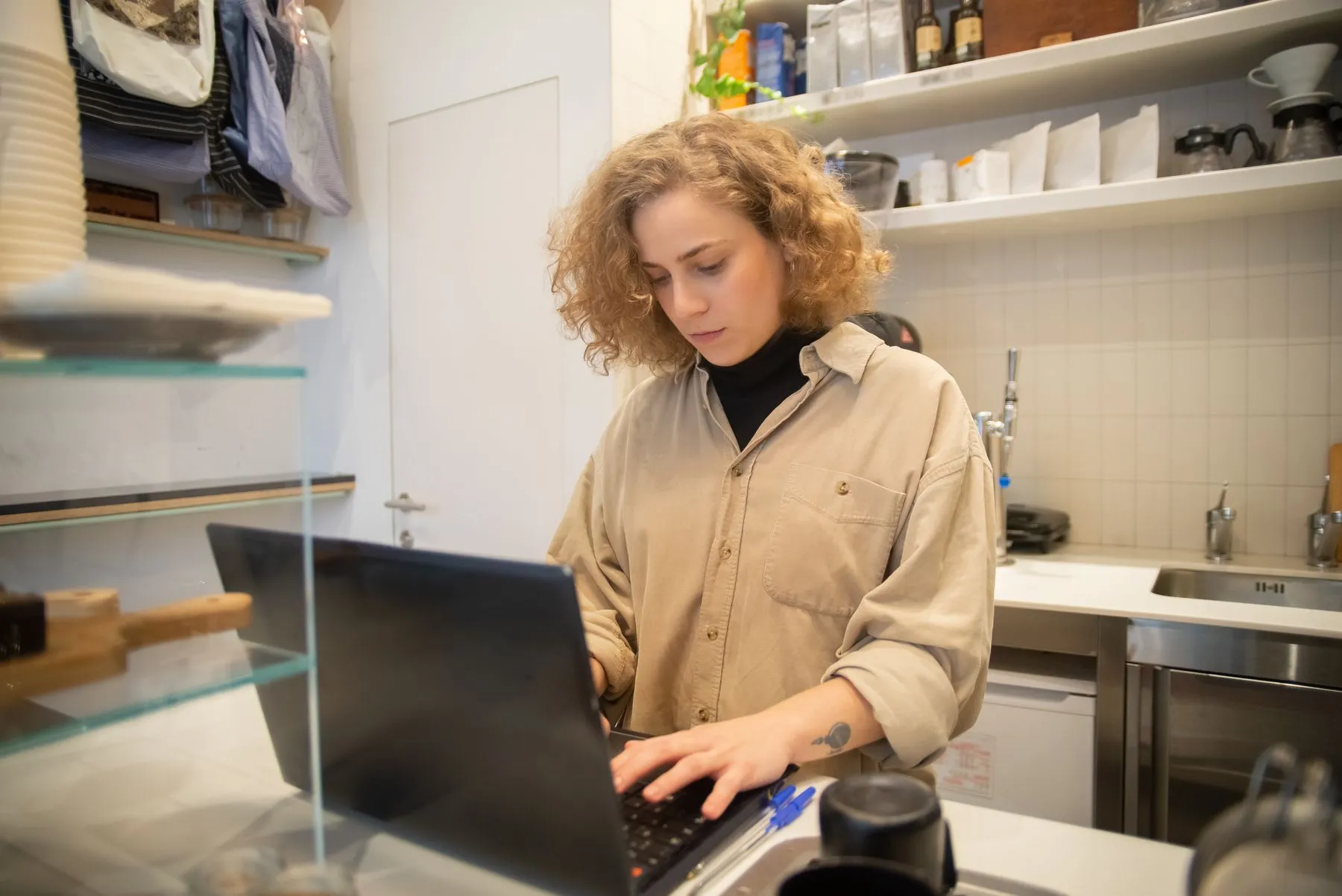
A café owner working at her counter

Freelancers & independents

Professional documents without the professional headache.

A small Beirut shop entrance with produce crates

Shops & traders

Sales, expenses and who owes you — in both your currencies.

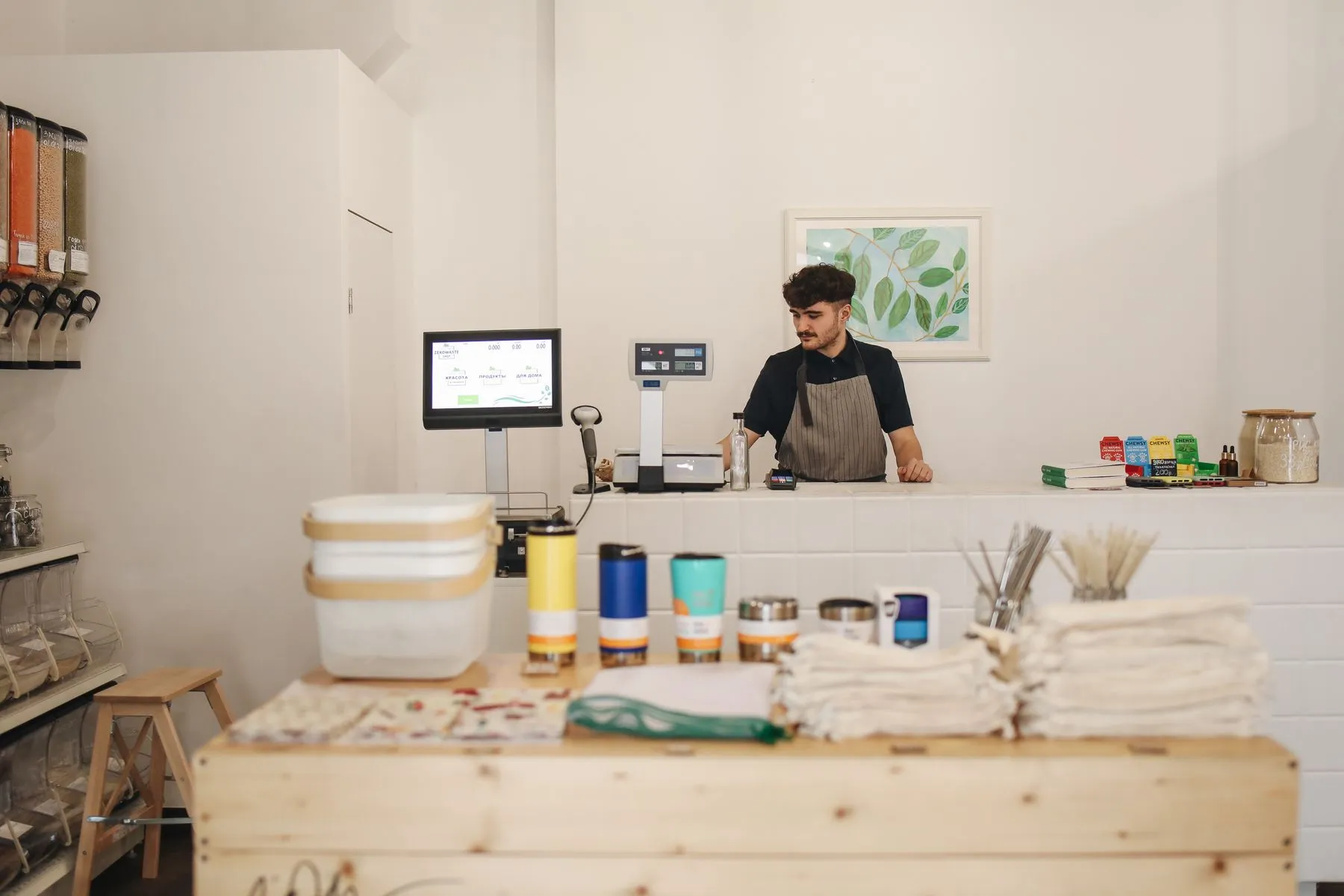
A young store owner at his shop counter

Service & home businesses

Real records without an office, a server, or an IT person.

Bring one real week of your business to a demo

We'll walk through it together — your customers, your currencies, your questions.